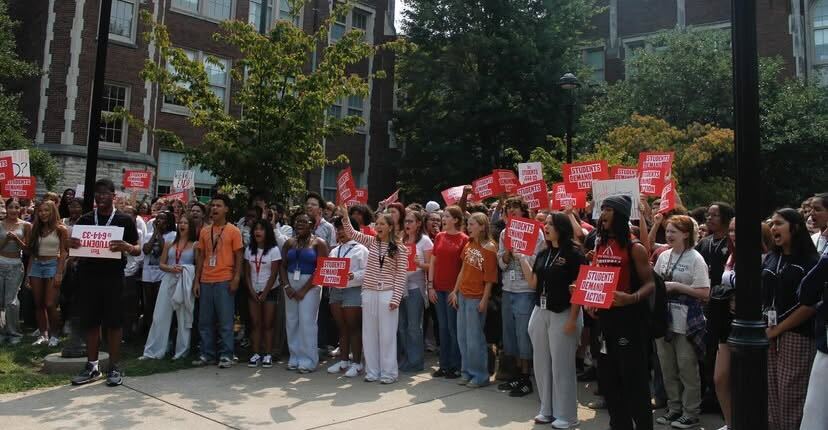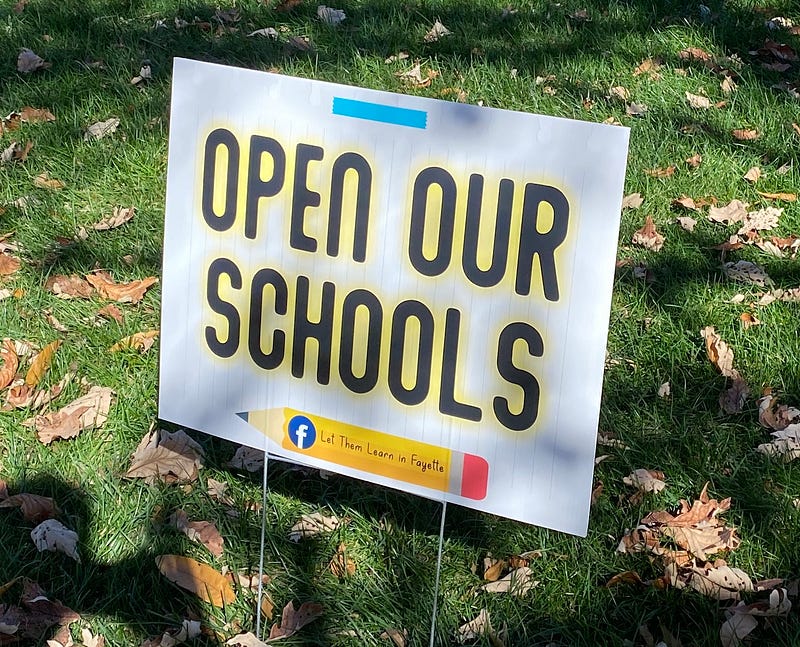
“Reopen the schools!” You’ve likely heard the cries, seen the signs, and maybe even shared the sentiment. Parents are sick of balancing work and childcare, and students are begging to get out of the house.
Even the CDC (Centers for Disease Prevention and Control) is urging schools to reopen. They offer a step-by-step plan to get students back into classrooms safely, encouraging measures such as mask-wearing, physical distancing, and frequent cleanings.
The Kentucky legislature has jumped onto the reopening bandwagon and introduced House Bill 452 which, if passed, would require school districts to provide an in-person learning opportunity once 80% of certified personnel and 80% of classified personnel are vaccinated for COVID-19.
This would dramatically accelerate the reopening timeline. Kentucky prioritized vaccinating teachers at the beginning of Phase 1b, which began in January. Most of Kentucky’s teachers had already received their first dose by Feb. 1. Nearly a month later, all teachers in Kentucky who opted to receive the vaccine had either received their second dose or will receive it in the coming weeks.
However, any school personnel who elect not to receive the vaccine are counted as vaccinated under the bill. Problematically, if the majority of school personnel rejected the vaccine, then schools would still be required to open in-person. This puts students at risk.
While HB 452’s demands might be enough for parents who want their children back in in-person school, is it enough for a safe re-opening? The only requirement is that teachers are vaccinated — not students.
Rightfully, teachers across the country are demanding vaccines to minimize risk and maximize safety. The American Federation of Teachers, one of the nation’s largest teachers’ unions, predicts more than 530 of their members died because of COVID-19 last year, although it’s unclear if these figures are related to re-openings — there are too many unknowns to say.
Being exposed to hundreds of students on a daily basis is certainly not desirable in a pandemic, and now that Kentucky has prioritized teachers in vaccinations, it brings up the question: “What about the students?”
There are six stages in Kentucky’s vaccine phases, and most K-12 students are only even eligible during the last two. Now, this is even if we get a vaccine, because so far most vaccines authorized in the US are only for adults.
While teenagers don’t fall severely ill from COVID-19 as often as adults, they become infected at almost twice the rate of younger children, and research suggests that they can spread the virus to each other and to older family members because they are often asymptomatic and casual about social distancing.
The jobs most common among young people, like food service and health/education services, are now being deemed “essential.”
But it is not just hazardous friend hangouts putting students at risk — it’s also essential work.
From April to July of 2019, The Bureau of Labor Statistics reported that 21.3 million people between the ages of 16 and 24 were employed. The jobs most common among young people, like food service and health/education services, are now being deemed “essential.” This means that many students are at extreme risk when it comes to contracting COVID-19.
In a reopened school, a vaccinated teacher might be safe from developing COVID-19 symptoms from an infected student, but unvaccinated students aren’t. The students are still vulnerable.
If we are reopening schools, the vaccinations of students should be prioritized as well to minimize spread into their communities and protect the students themselves.
When I was reading the bill, something stood out to me.
The bill reads, “The citizens of the Commonwealth, and especially its children, have experienced significant negative consequences due to the restrictions imposed as a result of the COVID-19 pandemic, and the increasing evidence of long-term adverse impacts demands the ending of restrictions as COVID-19 vaccinations are administered[.]”
I believe the legislators are correct about the negative consequences children face due to COVID-19. The proportion of children’s emergency room visits related to mental health has increased 31% across ages 12–17, and 24% across ages 5–11. And researchers have begun investigating how high school students will bear the long-term consequences of COVID-19.
However, acknowledging the potential mental health benefits while disregarding the physical risks is cherry-picking at its finest. Even if reopening schools does improve mental health slightly, it doesn’t compare to actual investment into student mental health resources.
Data from the Kentucky Student Voice Team’s Coping With COVID Study found that after the pandemic started, there was a 50% increase in the number of Kentucky students who wanted but lacked access to mental health services. It’s not enough to simply reopen schools. Students are asking for mental health resources, and we need to ensure they have access to them to cope with the challenges they faced before the pandemic started, and those that were exacerbated by the events of the past year.
It’s also important to note that while many teenagers have been lucky in avoiding severe COVID-19 symptoms, some have still died from it, and the long-term impacts of infection are still unclear.
Taking actions to vaccinate students and consider the needs of individual districts and communities would only do good.
If the only safety concern legislators have in reopening schools is for teachers, then is the bill really in the students’ benefit? Or are teacher vaccinations being used as an excuse for reopening faster, without concern for the risks students, teachers, and their families might incur?
The constant deprioritization of students in reopening school concerns dehumanizes them, from lack of a vaccine to lack of representation in legislature. Students across Kentucky need reassurance that their state cares about them and recognizes them as victims and stakeholders, and not as political pawns to play in the legislature.


.png)