


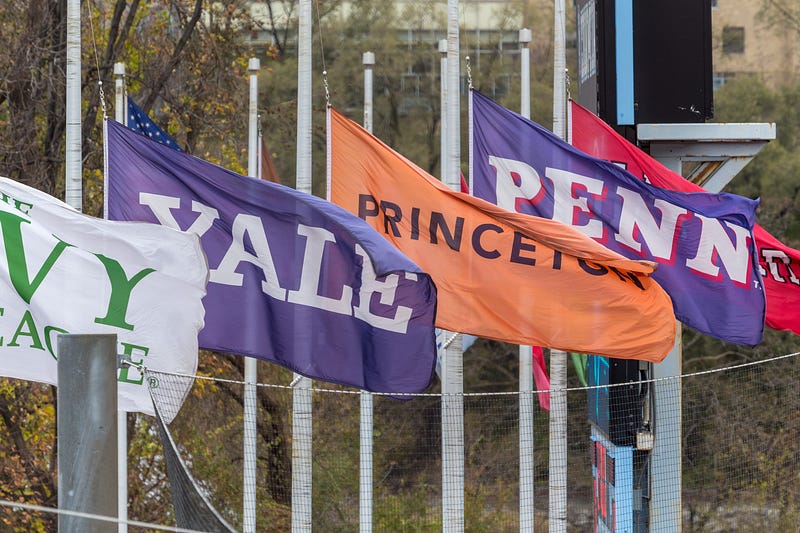
Diversity. Diversity is a lot of administrators’ favorite word; however, it means nothing when there is no action to make it happen. Ivy League schools, on average, have below 10% of students that are African American.
Ivy League colleges, and the advanced programs that prepare students for them, need to be more diverse. The big question is why? Why aren’t they diverse already?
I attend a program that helps hand-picked students prepare for, get scholarships to, and ultimately enroll in Ivy League colleges; I’ll call it College Prep. When I first heard about the College Prep program, I was eager to be a part of it. My middle school principal highly recommended that anyone who is considering furthering their education would benefit from this program. I was told that the program was very diverse, but I quickly found out that it was not. An Ivy League student is stereotypically white, male, and rich, and the stereotypical College Prep student is not much different.
This stereotype has been mentioned a few times throughout my time in the program. One of these times, I was at a College Prep meeting holding cards for an activity we were doing. Myself and several of the other students of color were called to the front of the meeting to participate in the activity. The head of College Prep brought up the stereotype and called us the opposite of what people would normally see at an Ivy League college in front of our fellow College Prep program students.
Don’t get me wrong: I completely understand the point he was trying to make about the lack of diversity in elite schools; he’s a great guy who is taking his personal time to make sure students go to college. But this experience did make me and the other students feel ostracized, since there were only about 13 minority students present out of about 40 students. This experience also made me question whether or not I belonged in the College Prep program, or at an Ivy League college. Am I always going to be considered an outsider?
To get a different perspective, I asked the head of the College Prep program what he looks for when picking students for the program. I needed to know what the thought process was for someone in his position and why so few students of color are in the program.
“This experience also made me question whether or not I belonged in the College Prep program, or at an Ivy League college. Am I always going to be considered an outsider?”
“I look for what a college would look for,” he said. The first thing he mentioned was work ethic. Then other values: attendance, punctuality, hard work. Next, the future. He described this as if a student looks past tomorrow and sees the bigger picture. Then, leadership potential. Will this student get out of their comfort zone to explore their true identity? He also considers test scores, although he says this is the last thing colleges look for. “When we sit down in the future to find out where you are going to apply, I’m not going to say, ‘Well, here’s your ACT score and here’s where you “can’t” apply,’ because that’s the last thing they care about,” he said.
Next, we talked about how lack of diversity in advanced programs is a nationwide issue. In his opinion, a lot has to do with two things. One, “They’re hard classes, and you have to have some type of foundational grounding to take the courses,’’ he said. Students who come from a low income background, who are disproportionately students of color, often go to schools that aren’t funded as well and have less experienced teachers, leaving them less prepared for a program like College Prep. Two, “Some schools [nationwide and in our school district] gatekeep,” he said. “This means you need to have a certain score on COGAT to take an AP course.” He described these requirements as a self-fufilling prophecy that perpetuates a lack of diversity.
He said all of the right things in response to my questions, but still the fact of low diversity remains.
The College Prep program wasn’t always this way. All positive things start for a good reason but somehow change over the years, decades, and centuries due to politics, money, and numerous other reasons. This program was no different. The College Prep program was originally designed to help low income, first generation, minority students — the students who normally would not get help for college. According to the head of the program, for the past two or three years, students have increasingly been none of these things. Sometime over the past few years, the program has shifted from the original “design.” But after talking to the head of the program, it sounds like it will be going back to the way it was originally intended to be. Beforehand to get accepted into the College Prep program, you had to apply while still in middle school. The program increasingly accepted students who it was not designed to serve. Starting with the 2021–2022 school year, students will come into the high school and take advanced classes. After the first semester, they can then apply for the program. Admission will still be based on grades, attendance, behavior, and effort, but it will also give preference to the students who need the most help with applying to college. The program will give preference to students who are low income, first generation, minority students. “There still may be middle class white students whose parents went to college,” the head of College Prep said. “However, they won’t be the majority in the program.”
I feel like my conversation about diversity brought awareness and got the head of the program thinking as he talked to me. Maybe my conversation with him is what will ultimately right the ship. If so, maybe the same amount of attention needs to be put into Ivy colleges? Maybe we need more national attention on the troubling statistics that are easily obtained about how little diversity these schools have?
I hope to offer assistance or to be a part of this change. I will continue to learn and grow so that I can secure my future at an Ivy college, but I also will help bring awareness to a national problem that should have already been addressed — and I hope you will, too.


%20(1).png)

.png)

.jpg)